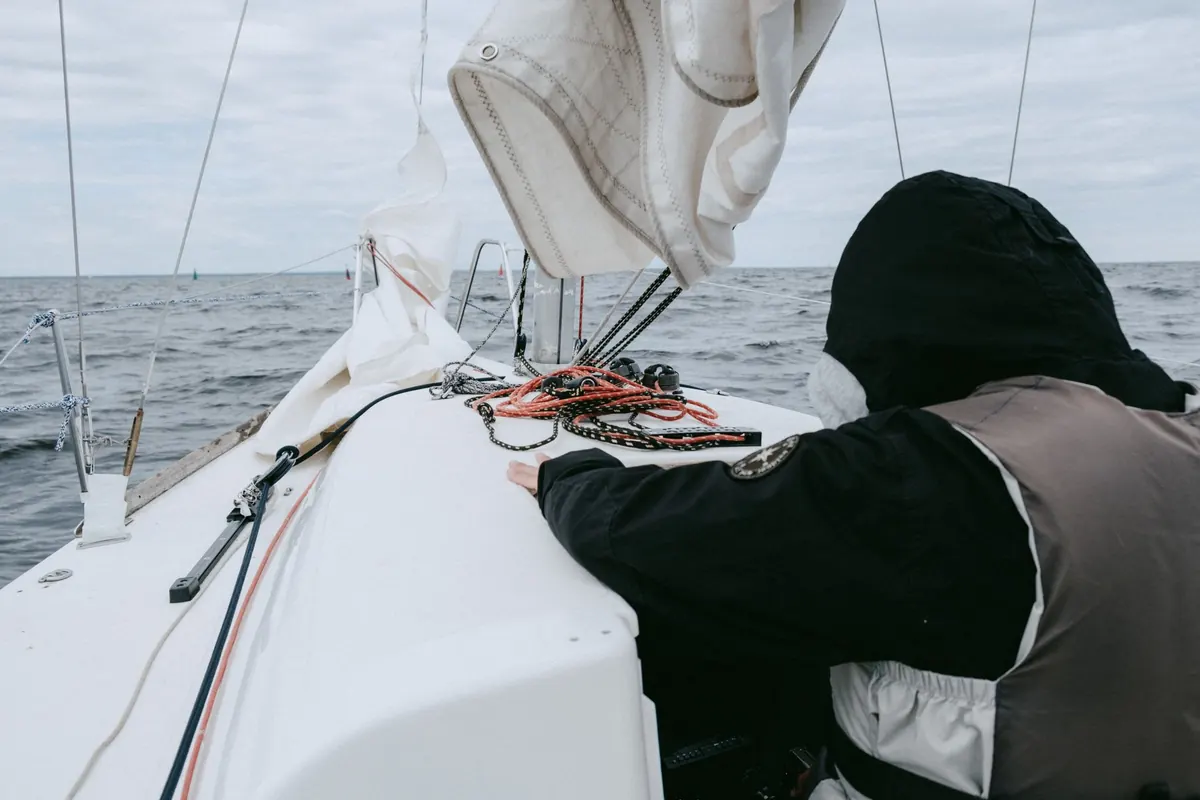
You step aboard, duck under the boom, and someone hands you a winch handle. "Take the lazy sheet when we tack." You nod as though this means something. Everyone else looks busy and competent. The skipper is watching the wind on the water, two people are pulling on a rope with real effort, and the boat is already leaning.
This is normal. A first day on a sailing yacht is not an exam. It is a working day on a small floating platform where everything has a name, a purpose and a place, and where your main job for the first hour is simply to stay safe, stay upright and keep your fingers clear of the winches.
Who does what on board
Yachts run on a straightforward division of labour. On a day sail with four to six people you will probably try most of these roles, and nobody expects you to be good at any of them yet.
The helm steers, calls the manoeuvres and keeps an eye on everyone. On a training or charter boat the skipper usually takes the wheel for leaving and entering a berth, because that is where things can go wrong fastest.
The trimmers look after the sails. The mainsheet trimmer works the rope that controls the big sail behind the mast; the headsail trimmer does the same for the sail up front. Their job is to keep the sails full and quiet rather than flapping. You will hear words like "ease" (let the rope out), "trim on" (pull it in) and "grind" (use the winch).
The pit or mast is where the halyards live — the ropes that haul sails up and down. This is a good place for careful hands, because ropes under load can do damage if they run free.
The foredeck is the pointy end, handling anchors, fenders and mooring lines. It moves the most, so it suits people with good balance and a settled stomach. If you are feeling delicate, stay in the cockpit.
Rail crew sit on the windward side, keep the boat flat with their body weight, and watch for other vessels, buoys and floating debris. It is a genuinely useful job and a very good place to be on your first trip.
The words you will hear
- Sheet — not a sail, a rope. Each sail has one, and "the sheet" always means a specific one.
- Halyard — the rope that pulls a sail up. Halyards go up; sheets go in and out.
- Tack and gybe — turning the boat so the wind crosses from one side to the other. Tacking turns the bow through the wind; a gybe swings the stern through it and the boom comes across with force.
- Lazy sheet — the rope that is not doing anything at this moment. It is the one you are about to need.
- Winch — the drum you wrap a rope around to get leverage. Keep fingers and thumbs well clear of the coils.
- Fenders — the padded cylinders you hang over the side. "Fenders out" means you are arriving somewhere.
- Heads — the toilet. Ask how it works before you need it.
- Reef — to reduce sail when the wind strengthens. Not a punishment.
What to wear and what to bring
Dress for the water, not for the car park. It is almost always windier and colder out there than it looked from land, and a warm afternoon can turn grey and damp within an hour. Layers that you can shed and put back on beat one thick jacket every time. Avoid cotton next to your skin — jeans are genuinely miserable once wet, because denim holds water and stays cold.
Pack for a day that might involve spray, sun, sitting still and sudden effort:
- Soft-soled shoes with grip, or check whether the boat is a barefoot one. Marking soles are unpopular.
- Waterproof jacket and trousers, even in a settled summer forecast.
- A fleece or mid-layer, plus a spare in your bag.
- Sailing gloves, or cheap gardening gloves with a leather palm. Rope burn is real.
- Sun cream, a hat with a strap under the chin, and sunglasses on a cord. Sun off the water is stronger than you expect.
- A refillable water bottle and snacks you can eat one-handed.
- A small dry bag for phone, keys and wallet. A waterproof phone pouch if you want photographs.
- Any regular medication, and a change of clothes left in the car for the drive home.
- Food if you have been asked to bring some — already prepared, easy to serve, nothing needing two hands or a knife and fork.
Seasickness: prevention beats cure
Most people feel a bit off at some point, particularly if they go below to read or use the chart table while the boat is rolling. The most reliable habits are dull but effective: stay on deck, keep the horizon in view, stay warm, and keep doing something. Helming is often the best remedy of all — the person steering tends to feel the least.
Eat something plain before you leave the pontoon, and go easy on drink the night before. If you plan to use medication for motion sickness, take it before you start feeling unwell, as most work far better as prevention. Some cause drowsiness, so read the label and, if you have an existing health condition or take other medicines, speak to a pharmacist or your GP first.
If you do start to feel ill, get the wind on your face and stay up top. Trips below decks make it worse. Nobody aboard will think less of you for sitting quietly on the rail with your eyes on the shore.
Etiquette aboard
Yacht etiquette is mostly common sense with a safety motive behind it. Turn up on time, dressed for the day and with your food ready. Ask before you move anything — boats have a place for everything, and the skipper needs to know where the throw line is. Keep the cockpit tidy, because a cluttered cockpit is a hazardous one.
Do not step on ropes. Lines carry load, and a foot on a sheet can jam a winch at the wrong moment. When moving about, keep one hand for the boat at all times, and mind your head near the boom, especially during a gybe. If the skipper calls "ready about", stop what you are doing, stay low and hold on.
Say what you see rather than what you fear. "Buoy, twenty metres off the starboard bow" is help. "We're going to hit it" is not. Ask for a lesson on the heads before you need one, offer to make tea at half time, and offer to wash up afterwards. Those small things make you the crew everyone wants back.
How the day usually unfolds
- Meet at the boat, load bags, and stow anything loose below.
- Safety brief: lifejackets, fire extinguishers, the radio and what to do if someone goes overboard.
- Cast off. You may be asked to hold a line or fend off the pontoon.
- Hoist the sails — one person on the halyard, one on the winch, one keeping the sail out of the wind.
- Sail. A couple of tacks, perhaps a gybe, and a spell on the helm if you want one. Say so; most skippers are happy to hand over the wheel.
- Stop for lunch at anchor or eat underway, depending on the plan.
- Return, fenders and lines out, berth alongside, then tidy up: coil the ropes, rinse the salt off, put the winch handles back in their pockets.
Before you step aboard
Confirm with the skipper what you need to bring and what time to arrive, and pass on your mobile number. Tell them about any medical condition or medication, and check that your lifejacket fits before you leave the berth — including the strap that goes between your legs. If you would rather wear one all day, wear one. Plenty of experienced sailors do.
Look at the forecast the day before. If it is blowing hard and you are unsure whether your stomach is up to it, ask whether the trip is still going ahead and whether a calmer day might suit you better. There is no shame in choosing light airs for a first sail; there is a great deal of pleasure in getting it right.
Photo: cottonbro studio / Pexels