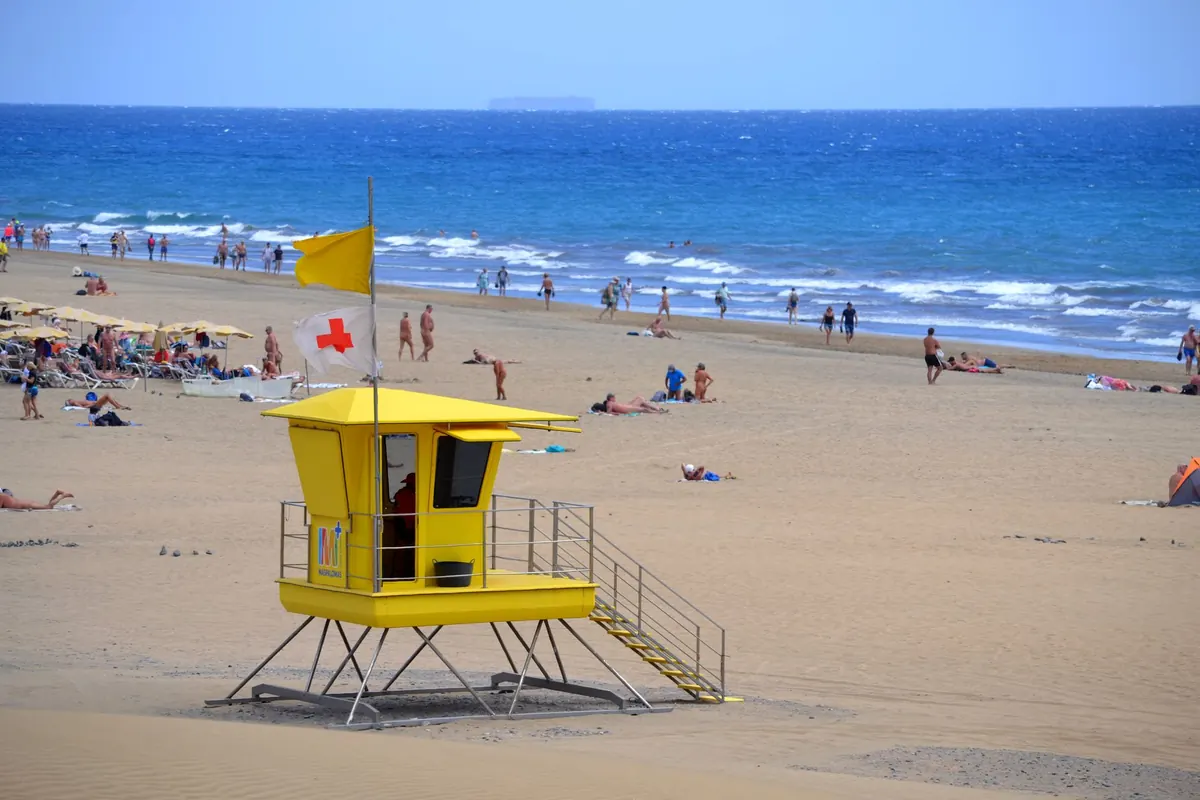
The car park is behind you, the windbreak is up, and someone has already lost a flip-flop. Before the first person sprints for the water, look at the flagpole beside the lifeguard hut. Those coloured flags are a live safety briefing, set by the people who have been watching the sea all morning. They can go up, come down or move within an hour. Reading them takes seconds and tells you where to swim, and when to keep everyone on the sand.
The flags at a glance
Lifeguarded beaches around the UK use the same basic system, so the flags you learn in Cornwall will make sense on the Northumberland coast or in a Pembrokeshire bay. The logic is blunt: red means no, red and yellow means yes, chequered means boards only.
- Red and yellow flags — the lifeguarded swimming area. Swim, bodyboard and paddle here.
- Black and white chequered flags — for surfboards, kayaks and paddleboards only.
- Red flag — do not enter the water, whatever your ability.
- Orange windsock — offshore wind. Inflatables stay on the beach.
- No flags at all — usually no lifeguards on duty. You are responsible for your own safety.
If the pole is bare but the hut is staffed, ask. Flags are sometimes being repositioned as the tide turns, and a two-word question beats guessing.
Red and yellow: where you should be swimming
This is the flag pairing that matters most to most people. The red and yellow zone marks the stretch of water the lifeguards judge safest for swimming and bodyboarding, based on the currents, the sandbars and the swell that day. It is often a short section of a long beach rather than the whole bay.
Swim between the flags, not alongside them. The sea either side can look calm and inviting while hiding a rip current, which is a channel of water heading out to sea faster than you can swim against it. Calm, flat patches between breaking waves are exactly what a rip looks like from knee height.
Two things catch people out. First, the flags move. A zone that was perfect before lunch can shift as the tide drops, so check again after your sandwiches. Second, children drift. If you are supervising from a towel, pick a fixed landmark on the beach and position yourself so the red and yellow flags sit between you and the water. If you find yourself outside the zone, walk back along the sand rather than swimming across.
Red flag: the one that means stop
A single red flag means the water is closed. Not closed to weak swimmers, or to people without wetsuits. Closed to everyone.
There are several reasons a lifeguard will raise it: a heavy swell, strong currents, poor water quality after heavy rain, or an incident such as a missing person or a search underway. None of them are visible from the promenade, and none of them improve because you are a confident swimmer. Paddling at the edge counts too; a wave that knocks you off your feet in shallow water can be enough.
If the red flag is flying, ask a lifeguard how long it is likely to stay up. Sometimes it comes down within the hour. Until then, the beach is still open, the sandcastles still work, and the sea will wait.
Chequered flags and the orange windsock
Black and white chequered
A black and white chequered flag marks the zone for surfboards, kayaks and stand-up paddleboards. It is not a second swimming area. The point is separation: boards moving at speed and people bobbing about at head height do not mix, and a loose board in a shore break can do real damage. If you are swimming and drifting towards the chequered zone, turn around and head back between the red and yellow flags.
Orange windsock
The orange windsock is flown when the wind is blowing offshore, from the land out to sea. It is the flag most often ignored, and the one behind a good number of callouts.
On an offshore wind day, the sea can look glassy and gentle while the surface is being pushed away from the beach. Lilos, ringos and cheap inflatable dinghies get carried out quickly, and no amount of paddling brings them back. Leave them in the car, or better still, in the garage. If you do get caught out on something inflatable, stay with it, wave for help and shout rather than trying to swim for shore.
No flags, no lifeguards
Lifeguard patrols are seasonal, and seasons vary from beach to beach. Outside them, the flags come down and the hut is empty. That does not make a beach unsafe, but it does change the deal: there is no one watching, and no one coming unless somebody calls for them.
Before you swim without lifeguards, check the tide times and which way the tide is running, look for the beach's hazard board or notice at the entrance, and swim with someone rather than alone. Tell a friend on the sand where you are going and how long you plan to be in. Take a phone in a waterproof pouch if you have one.
A two-minute routine before anyone gets wet
- Find the lifeguard hut and read the flags.
- Note where the red and yellow zone sits and pick a landmark on the beach to aim for.
- Check the tide times and whether it is coming in or going out.
- Agree a meeting point in case you get separated from your group.
- Ask a lifeguard about anything you cannot see: currents, jellyfish, water quality after rain.
If the water does get on top of you, do not try to beat a rip current by swimming straight back to the beach. Swim parallel to the shore until you are out of it, then head in, or float on your back with one arm raised and shout for help. If you see someone else in trouble, dial 999 and ask for the coastguard rather than going in after them. The flags are there to give you a head start. Use them and the rest of the day stays a beach day.
Photo: Karina Badura / Pexels